


Beer vs. ale: what’s the difference and which should you drink? 🍺
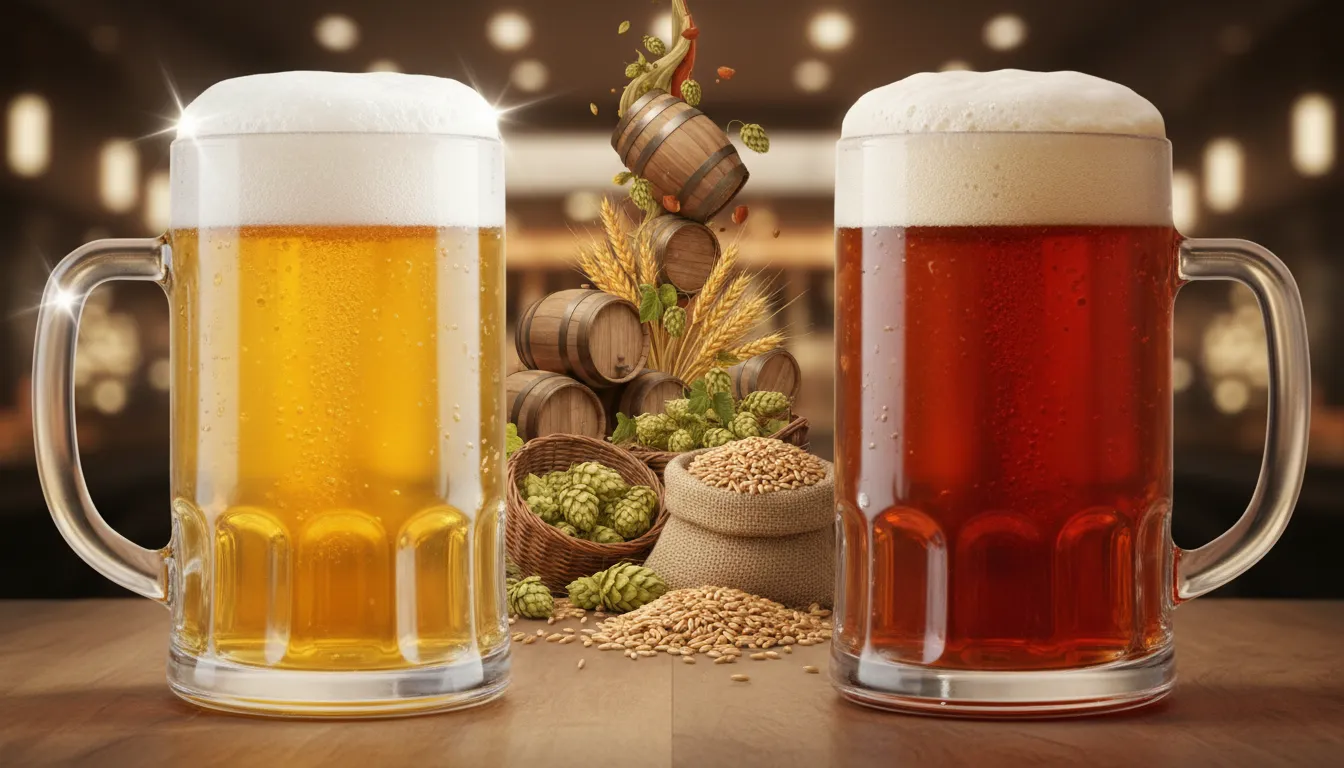
In every bar or brewery, the menu can sometimes feel like a puzzle. You see terms like beer, ale, lager, stout, and IPA. But as soon as someone asks “is beer the same as ale?” confusion arises. The short answer: ale is a type of beer, but not all beer is ale.
This guide explains the difference in a way you can immediately apply when ordering: how beer and ale are brewed, why they taste different, and how to make the right choice based on your taste preference.
🍺 Beer is the umbrella term, ale and lager are styles
If you look at beer broadly, you can see it as a family. “Beer” is the collective name. Within that family are important branches, mainly:
- Ale
- Lager
Many well-known beer types fall under these two. Think of styles like stout, porter, and IPA. They can differ greatly in flavor, but they all fit within the larger ale or lager concept.
Why you often say “beer” but actually mean “lager”
In everyday language, people sometimes use “beer” as a synonym for lager, for example when saying “just a cold beer.” This can be true in practice because lager is very dominant worldwide. But strictly speaking, “beer” means the bigger whole, and ale is simply part of that.
🧫 The biggest difference: yeast and fermentation
The main difference between ale and lager lies in the yeast used and the fermentation process. This directly affects:
- aroma
- flavor
- mouthfeel
- alcohol content (often, but not always)
- time to final product
- how “clean” or neutral the beer tastes
Ale: warmer, faster, and with “top-fermenting” yeast
Ales are generally brewed with yeast called “top-fermenting.” In practice, this means fermentation happens at higher temperatures, often around 60 to 75 °F. This can make fermentation relatively fast, sometimes in the order of a week.
Those warm conditions allow for more yeast-driven flavors to develop. In brewer’s jargon, esters often come forward. These are aroma and flavor categories that can feel fruity (for example apple, pear, or banana) and sometimes a bit spicy (like a hint of clove).
Lager: colder, slower, and with “bottom-fermenting” yeast
Lagers are generally brewed with a different yeast type, “bottom-fermenting.” This yeast works better at lower temperatures, often around 45 to 55 °F. The result is that fermentation takes longer, sometimes several weeks to months.
Because the process is colder, fruity yeast aromas are often less pronounced. This shifts the emphasis more to malt and hops, resulting in a profile often described as clean, crisp, or refreshing.
👅 This is how ale and lager usually taste: from fruity to clean
Although individual beers can of course be exceptions, this is the most useful rule of thumb:
- Ale: often more expressive, with more fruity or spicy tones from fermentation.
- Lager: often tighter and more neutral, focusing on malt and hops.
What notes can you expect in ale?
Due to the warmer fermentation, ales can more easily develop aromas that come across as fruity or even slightly spicy. That extra complexity can make your beer more interesting if you prefer complexity over just “tasty and easy.”
Additionally, ale often has a fuller mouthfeel. This relates to how the process influences the final balance.
What experience does lager usually provide?
Lagers are often seen as the beer you can drink throughout the day without constantly overwhelming your taste buds. Because of the less pronounced yeast profile, you more often taste:
- a smooth taste
- a light to medium body
- a fresh drinkability
A classic example people often mention is the golden pilsner. Not because every pilsner tastes the same, but because pilsner-style lagers often fit that idea: clear, refreshing, and not too pronounced.
📈 Alcohol and body: often but not always
A common link between ale and lager concerns alcohol content (ABV) and mouthfeel. In most cases:
- Ales often have a slightly higher ABV and a fuller feel.
- Lagers are more often lighter in body and tend to have a slightly lower ABV.
But it’s important to see this as a guideline, not a rule. There are strong lagers and also lighter ales. Styles and individual recipes can disrupt that general trend.
🏛️ Where does lager come from (and why did it become so popular)?
Lager is strongly linked to a historical idea of storing beers longer in cool conditions. Brewers noticed that storage in cool spaces often made the beer smoother and more durable.
This process is linked to the German term for “storage”. Later, technological advances like cooling and the discovery of yeast processes helped produce lagers in larger volumes.
The result: lager grew into a major force in the commercial beer world. Many well-known, globally sold beers fall under lager styles.
🧪 Why ale is making a comeback through craft beer
Although lager dominates worldwide, ales have gained extra attention in recent decades thanks to the craft beer culture. Craft brewers like to experiment with recipes and yeast characters. This means you see a lot of variation in the ale category:
- various IPA variants
- stronger or “double” versions
- Belgian-inspired ale styles
- wheat beers and seasonal beers
In other words: lager is often “mainstream and predictable,” while ale is more often the stage for flavor experiments, especially in small breweries.
❌ Common misconceptions about beer and ale
1) “Ale is not beer”
Incorrect. Ale is beer. The difference lies in the style and especially in yeast and fermentation.
2) “If I order beer, I automatically get ale”
Not necessarily either. In many contexts, “a beer” simply means you choose a lager, because that is often the standard offering.
3) “Ales are always heavy and strong”
Not true. Ales can definitely be strong, but there are also lighter, easy-drinking ales. It depends on the recipe and chosen style.
4) “Lagers are always light and weak”
Same story, but reversed. There are lagers that are clearly stronger and taste intense. The style often gives a direction, but beers are made with a lot of variation.
🧭 Choose your beer: a practical decision checklist
If you don’t want to keep hesitating in a busy bar, use this simple checklist. It helps you quickly go from “what’s the difference?” to “this fits my craving.”
Want something fruity or spicy and more character?
- Choose ale more often.
- Watch for words in the description that fit esters and spicy or fruity aromas.
Want something clean, refreshing, and easy to drink?
- Choose lager more often.
- Look for terms that emphasize clarity, freshness, or a “clean” profile.
Pay attention to mouthfeel and “heavy versus light”
- If you like fuller and rounder: more often ale.
- If you like crisp and light: more often lager.
Check the label for ABV and style info
Because general trends are not always accurate, look at what the label or the menu indicates. Especially for beers that fall outside the usual framework.
🍻 Examples of orders that let you feel the difference immediately
Here are a few “ordering patterns” that often help you in practice.
Scenario A: you want a cold beer that’s not too intense
- Ask for a lager (for example, something described as pilsner-like or fresh).
- Focus on terms like “crisp,” “clean,” and refreshing.
Scenario B: you want something with more aromas to discover
- Ask for an ale.
- Let yourself be guided by descriptions that point to fruity or spicy notes.
Scenario C: you want lager, but also some extra excitement
- Look for lagers with clear malt or hop expression.
- Check ABV if you want something stronger, because “lager” doesn’t automatically mean “weak.”
Scenario D: you want ale, but still light and easy to drink
- Look for ales described as “session” or light.
- Check ABV to estimate strength and intensity.
⚠️ What to watch for when comparing
Even if you understand the ale-lager distinction, there are a few factors that can explain flavors you don’t directly associate with yeast.
- Style subtype: terms like stout, porter, and IPA describe extra characteristics on top of ale or lager.
- Recipe variation: hop choices, malt types, and amounts can enhance or tone down the yeast character.
- Serving temperature: a beer served too warm can show more aromas than expected.
That’s also why “ale is always fruity” and “lager is always neutral” are not absolute rules. But as a starting point, the distinction is very useful.
In summary: which one should you drink?
If you take away one thing, make it this simple connection:
- Ale: usually warmer, faster, with more yeast-driven aromas (often fruity or spicy) and often a fuller mouthfeel.
- Lager: usually colder, slower, and clean or crisp, often with more emphasis on malt and hops and a lighter body.
“Beer” is the family. Ale is one branch. And lager is the other major branch. Neither is objectively better. The best choice is the one that fits your mood at that moment.
✅ Quick next step: use this with your next order
- Determine your preference: more aroma (ale) or clean and fresh (lager).
- Scan the menu for style terms that support that direction.
- Check ABV if you want to drink something strong or light.
- Remember: exceptions exist, but yeast and fermentation explain most of the difference.
With this framework, you can better place any beer suggestion. And the next time someone says “just a beer,” you’ll know exactly what they mean and what you’re likely to get.