



Flemish Red and Oud Bruin explained: history, taste, and differences
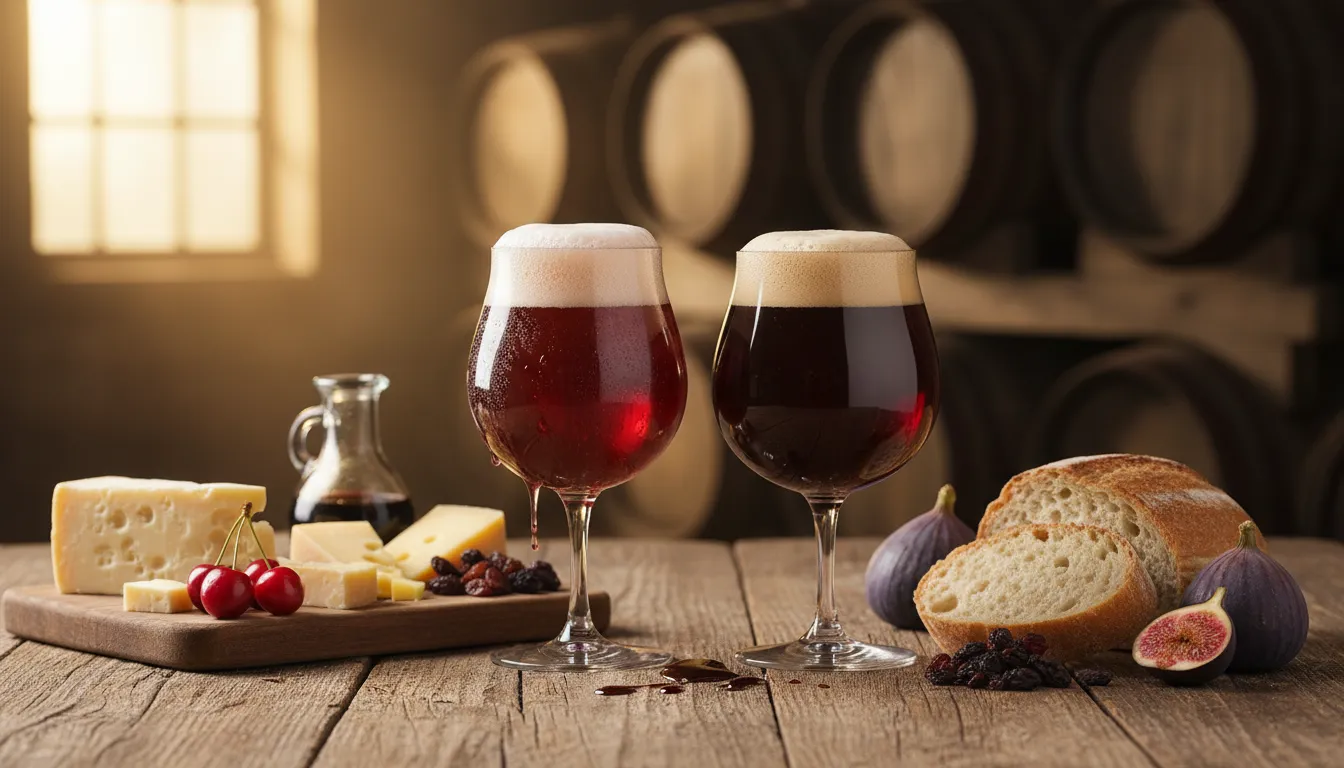
Flemish Red (also called Flanders Red Ale) and Oud Bruin are two traditional Belgian sour beer styles that often cause confusion. Both have a deep, wood-aged sourness and notes of fruit and balsamic, but they differ in key points of production method, microbial profile, and flavor balance. This complete overview explains what these styles are, how they are made, why they taste the way they do, how best to serve them, and which foods pair well.
🍒 What is Flemish Red (short and clear)?
Flemish Red is a traditional Belgian sour beer style from West Flanders. Characteristics:
- Color: reddish brown to ruby red.
- Taste profile: distinct sour note with both lactic (lemony) and acetate/aceto (balsamic, vinegary) tones; balance between sweet and sour.
- Fermentation and aging: primary fermentation by Saccharomyces; sour development largely during aging in oak barrels by Lactobacillus, Pediococcus, and Brettanomyces; often blending of old and young beers for a consistent final balance.
- Alcohol: usually 5–6.5% ABV, but can vary.
🍫 What is Oud Bruin (short and clear)?
Oud Bruin (literally "old brown") is similar but especially popular in East Flanders and parts of Belgium. Highlights:
- Color: dark brown to copper-colored.
- Taste profile: drier and less acetic than Flemish Red; more lactic acids and oxidation references; less emphasis on balsamic.
- Fermentation and aging: often made with warm-fermenting yeast and longer aging in stainless steel or smaller barrels; sometimes less Brett or acetobacter activity.
- Alcohol: usually 4.5–6% ABV.
📜 Brief history and development
The current form of sour Flemish beers is largely a 19th-century development. Brewing in Flanders has always had regional variants, but changes in barrel usage, trade contacts with England, and the popularity of long-aged, hopped beers played a role in the standardized production of wood-aged sour beers.
Important historical factors:
- Oak aging: large oak foeders were used for consistency and slow acid development.
- Blending: mixing multiple vintages or barrels to achieve a balanced sweet-sour taste.
- Commercial positioning: beers were sometimes presented as an alternative to wine, with marketing that imitated terms from the wine world.
🔬 Why do these beers taste so sour and complex?
The sour and complex flavors arise from a combination of ingredients, microorganisms, storage method and human intervention:
- Microbial activity: Lactobacillus and Pediococcus produce lactate acids (lemony, fresh). Brettanomyces gives complex "funk", spicy and sometimes fruity esters. Acetobacter produces acetic acid and balsamic-like notes when oxygen is present.
- Wood aging: oak barrels allow micro-oxygenation and impart tannins and vanillin, which can contribute to the wine-like or balsamic character.
- Sugar and sweetness: old beers can be very concentratedly sweet; brewers blend young, sweeter beers with old, sour barrels to achieve balance.
- Malt type: often a mix of pils malt, Vienna and caramel/crystal malts for color and body.
⚙️ How is Flemish Red brewed? Step-by-step
Below is a concise production process, from mashing to bottling, with the aspects crucial for the final profile.
- Mashing: usually high conversion with base malt (pils or pale) plus Vienna and crystal malt for color and body.
- Boiling: short to medium boil duration; moderate hopping for shelf life without dominant bitterness.
- Primary fermentation: Saccharomyces carries out the main fermentation. In some traditions open fermentation was used, allowing wild yeasts in.
- Transfer to barrels: beer is transferred into large oak foeders or smaller barrels. The micro-oxygenation and microbes in the wood start the sour development.
- Inoculation or spontaneous development: some brewers inoculate their barrels with specific cultures (Pediococcus, Lactobacillus, Brettanomyces). Others rely on natural inoculation from wood and environment.
- Maturation: months to several years. The acidity builds up slowly; acetobacter can form balsamic-like acetic acids if oxygen ingress occurs.
- Blending: master blenders mix old, very sour barrels with younger, sweeter batches to achieve the desired sweet-sour balance and aromatic complexity.
- Bottles or kegs: the final product is bottled or put into kegs. Some variants are bottle-conditioned, others are filtered and pasteurized for consistency.
🔍 Flemish Red vs Oud Bruin: concrete differences
The terms are often distinguished in international beer style guidelines, but in Belgium the boundaries are fluid. Below is a practical table in text form with the main differences.
- Acid balance: Flemish Red: often more acetic and balsamic; Oud Bruin: more lactic, subtler acid.
- Maturation: Flemish Red: often oak barrels and longer wood influence; Oud Bruin: more often stainless steel or shorter barrel aging.
- Flavor: Flemish Red: sweet-sour, cherry and balsamic notes; Oud Bruin: drier, caramel and red fruit tones without strong balsamic.
- Yeast and wild microbes: Flemish Red: more often Brett and Acetobacter; Oud Bruin: more controlled yeast profiles, less acetobacter.
- Use: Both are culinary beers; Flemish Red pairs with rich meat and sweet dishes; Oud Bruin is often easier to use with savory stews and cheeses.
👅 How to properly taste Flemish Red and Oud Bruin?
Tasting beers with complex acids requires attention to balance and sequence. Use this step-by-step plan:
- Temperature: serve at 10–12°C. Too cold mutes aromas; too warm enhances vinegary notes.
- Glass: wide tulip or bowl glass to concentrate aromas and allow breathing.
- Look: observe color and clarity; cloudiness can indicate active microbes.
- Smell: look for fruity esters (cherry, red fruit), wood tones, vinous balsamic, and acids (lemon vs vinegar).
- Taste: note first impression (sweet/sour), mid-palate (fruit, wood, funk), and finish (dryness, tannins, vinegar).
- Balance: pay attention to how sweet and sour work together; good examples have a harmonious balance, no single element dominating everything.
🍽️ Food pairing: practical combinations
Both styles are particularly suitable for pairing with food because their acids and tannins can cut through and enrich dishes. Some proven combinations:
- Glazed ham: sugar and acid enhance each other; especially Flemish Red is classic.
- Beef carbonnade: traditional Belgian stew, in which the beer itself is used as a cooking ingredient.
- Aged cheeses: hard cheeses like aged Gouda, Parmigiano-Reggiano, or Comté work well; the acids cut through fat and enhance umami.
- Balsamic-glazed dishes: balsamic-like notes in the beer pair nicely with similar sauces on meat or vegetables.
- Desserts with red fruit: cherry pies or rich brick-like desserts with caramel; be careful that the beer is not too vinegary for subtle desserts.
- Fermented vegetables: pickled vegetables or kimchi for lovers of sour-spicy combinations.
🧪 Common production errors and what to avoid
Sour beers are technically demanding. Some pitfalls:
- Uncontrolled acetobacter activity: too much oxygen leads to too strong vinegar taste. Check oxygen supply during barrel work and storage environment.
- Incorrect blending: not adding young beer can result in excessive dryness and insufficient body or sweetness.
- Wood with unwanted microbes: old barrels can provide positive complexity but also harmful contamination. Regular maintenance and testing are essential.
- Too cold storage: inhibits microbial activity and hinders development of desired acids and Brett characters.
💡 Practical tips for buyers and enthusiasts
If you want to buy, store, or taste these beers, keep the following in mind:
- Read labels: terms like "oak aged", "blended", "vintage", "unblended" and mention of Brett, Lactobacillus or Pediococcus provide insight into the profile.
- Choose according to taste preference: if you like strong balsamic and sweet-sour, try a classic Flemish Red. For a drier, calmer sour experience, try an Oud Bruin.
- Buy smaller sizes: some vintage or blended bottlings are complex; a smaller bottle gives you the chance to taste without a large stock.
- Storage: keep cool and dark; many of these beers can age, but be aware that active acetobacter can also continue aging into too much vinegar.
- Taste in context: taste with a bit of food to see how acids and tannins develop alongside fat and sweetness.
❓ Frequently Asked Questions
Is Flemish Red the same as kriek or gueuze?
No. Kriek is a lambic style made with cherries, and gueuze is a blend of young and old lambics that are often spontaneously fermented. Flemish Red is another family: it usually uses conditioned yeast selections and barrel aging (not necessarily spontaneous fermentation), and has a different microbial mix and flavor profile.
Can you brew these beers at home?
Yes, but it is technically challenging. Successful home copying requires:
- Good control of oxygen supply and hygiene.
- Access to suitable yeast and bacterial cultures or wooden barrels.
- Willingness to wait months to years for development.
Are these beers suitable for people who don't like sour beers?
Not always. Some are extremely acetic and can be off-putting. However, many modern variants and blends are balanced and can even be appreciated by lovers of other beer styles. Try small portions or beers labeled 'milder' or 'blended for balance.'
Why do some brewers call their beer 'red' and others 'brown'?
The terminology is partly historical and partly marketing. "Red" emphasizes the ruby-like appearance and the comparison to red wine; "brown" is more descriptive of color. International style guidelines distinguish them based on production method and sourness balance, but in practice they often overlap.
🔁 Blending: the secret art
Blending is crucial for many Flemish sour beers. The process:
- Evaluation of individual barrels on acidity, funk, fruitiness, and wood tones.
- Goal setting: determining the desired final balance (more fruit, more balsamic, drier, sweeter).
- Blending: combining 10–90% old barrels with younger beer until the flavor target is reached.
- Fine-tuning: small adjustments; sometimes sugar is added or bottle refermentation is used.
A good blender has sensory training similar to a winemaker: insight into how each barrel develops further after bottling is essential.
🏷️ Characteristic examples and what to expect from them
Well-known breweries and their interpretations (not an exhaustive list):
- Roddenbach-style: more balsamic, dry, approachable and often internationally known.
- Blended commercial Duchesse-style: fruity, sweet-sour with more body; intended as dessert beer or food pairing beer.
- Traditional small breweries: can be more radical, with more Brett funk and variable sour profiles.
⚖️ When is a Flemish Red or Oud Bruin good, and when not?
A good example:
- Has a clear, integrated acid balance without vinegar dominating the flavor.
- Shows depth of fruity and woody aromas without unpleasant oxidation or harsh ethanol.
- Blending delivers a coherent profile that offers both freshness and body.
Poor example:
- Has an overly sharp vinegar taste or smell of cleaning agent (too much acetobacter).
- Is unbalanced dry without any sweetness to carry the acids.
- Has unpleasant oxidative elements that do not contribute to complexity.
🔚 Summary and main takeaways
Flemish Red and Oud Bruin are two members of a family of wood-aged, sour Belgian beers. Key points:
- Flemish Red tends toward a sweet-sour profile with balsamic and cherry notes, often barrel-aged and blended.
- Oud Bruin is generally drier and more lactic in character, sometimes with less barrel influence.
- Blending and barrel aging determine the final profile; microorganisms like Lactobacillus, Pediococcus, and Brettanomyces do the work.
- Food pairing: ideal with savory, sweet, or umami-rich dishes such as glazed ham or stews and with aged cheeses.
- Tasting method: serve slightly warmer than cold beer to fully appreciate aromas and acids.
📚 Recommended next steps for enthusiasts
- Taste multiple examples: compare a classic Flemish Red with a local Oud Bruin to learn to recognize the differences.
- Try a blending tasting if available: many cafes and breweries organize vertical tastings.
- Read labels and ask about aging and blending when you are in a shop or bar; that tells a lot about the expected profile.
- If you brew at home, start with smaller experiments with lactobacillus and Brett, and invest in a small oak barrel or infusion chips to simulate wood influence.
Flemish Red and Oud Bruin reward patience and curiosity. Whether you are looking for a beer to serve at a feast or want to explore how sourness and wood can work together, these styles offer a rich world of flavors that are clearly different from the usual hop-driven beers.